
Body Rhymes: Activities to help early communication, learning and play
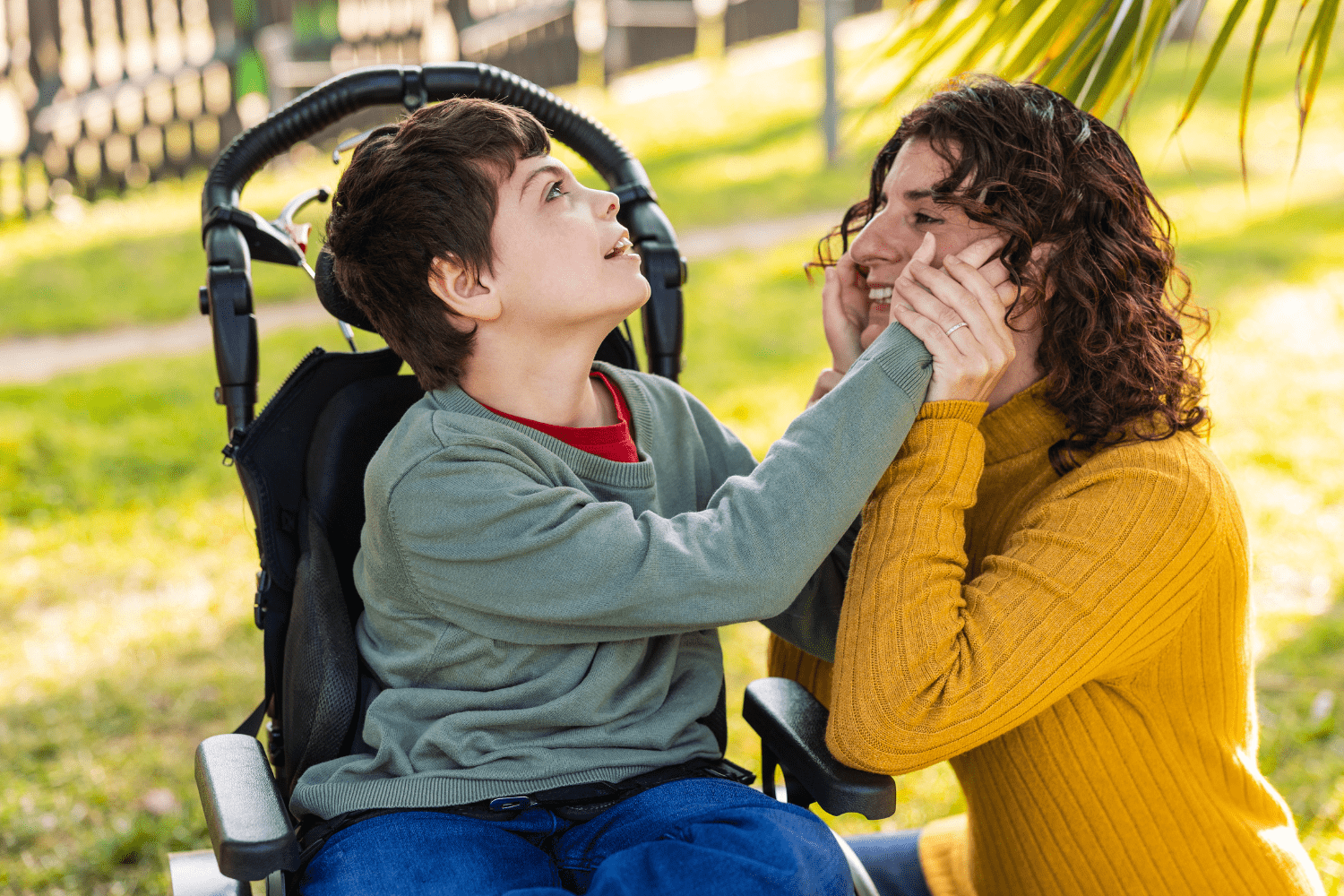
Body Rhymes are for children who are starting to join in and communicate on purpose.
They’re great for kids with complex needs or those who enjoy certain sensory experiences. These playful activities use movement and rhythm to make communication fun.
Body Rhymes help children take their first steps in communication, such as:
- noticing what’s happening
- reacting or responding in their own way
- turning toward sounds or voices
- making facial expressions
- moving any part of their body
- or showing what they want to happen
All before kids are ready to use words, signs, or other ways to communicate.
Body Rhymes are Multisensory People Play Games.
- People Play Games help children learn that playing together is fun. These games give extra practice and opportunities to develop early communication and thinking.
- Body Rhymes use objects for multisensory experiences such as vibration, textured balls, scarves, and fluffy cloths/ gloves. They make People Play easier to do with children with movement, vision, and sensory differences.
You can use the Body Rhymes activities on this webpage, or you can make up your own People Play.
This webpage includes:
- Body Rhymes demonstrations and handouts
- Ideas for making up People Play activities, and doing People Play in home languages (Coming soon)
- Body Rhymes handouts for downloading
- Toolkit for parents
- Toolkit for teachers
- All songs and rhymes handouts
Please tell us what you think
We want to know what you think about the Body Rhymes webpage, so we can make it even better.
Body Rhymes demonstrations and handouts
Watch the videos, listen to audio track, or download a handout
A note about on-body signing
These videos show on-body signing (tactile signing) for “more,” “finished,” “hello” and “goodbye.” The on-body signs are adapted from Makaton signs. Speech and Language Therapists and Vision Support Teachers developed these signs in Leicester, Leicestershire, and Rutland. Other similar tactile signing systems are in use in the UK.
We often recommend on-body signing for children who cannot easily see your signing or make signs by themselves. If your child does not like their hands touched or their movements are stiff, please talk to your child’s Specialist Teacher or Speech and Language Therapist about whether to use on-body signing.
Bubbles song
Click here to view a transcript of this video
In this video, Katherine moves the bubble wand to help Heena follow it with her eyes (tracking).
Catch a bubble on the wand to hold near your child. Can your child try to pop it, or look steadily at it (fix their gaze)?
If your child has a visual impairment, check what your child can do with their eyes. Talk to the Vision Support Teacher or Special School Teacher.
Listening track
Click here to view a transcript of this video
Handout
Bumblebee
Click here to view a transcript of this video
This red massage bug vibrates.
Take extra care when helping children to feel equipment, especially anything with vibration. Some children need to feel things on their arms, legs, and body before feeling things on their hands and face.
Stop if your child goes tense or shows signs they don’t like vibration. If your child gets very excited, give them a chance to relax afterwards.
Some children cannot look between the toy and the adult. Check what your child can do with their Speech and Language Therapist or Teacher.
Listening track
Click here to view a transcript of this video
Handout
Elephants have wrinkles
“Elephants have Wrinkles”, Words and Music by April Kassirer © Rock’n’Rainbow Music Publishing Ltd
Click here to view a transcript of this video
This blue ‘snake’ vibrates.
Take extra care when helping children to feel equipment, especially anything with vibration. Some children need to feel things on their arms, legs, and body before feeling things on their hands and face.
Stop if your child goes tense or shows signs they don’t like vibration. If your child gets very excited, give them a chance to relax afterwards.
Listening track
“Elephants have Wrinkles”, Words and Music by April Kassirer © Rock’n’Rainbow Music Publishing Ltd
Click here to view a transcript of this video
Handout
Furry hand
Click here to view a transcript of this video
Take extra care when helping children to feel equipment. Some children need to feel things on their arms, legs, and body before their hands and face.
Listening track
Click here to view a transcript of this video
Handout
Hat song
Click here to view a transcript of this video
Be flexible when you choose equipment: anything can be a hat! This tinsel pompom looks, sounds, and feels interesting.
When the “hat” is on your child’s head, pause to see if your child moves, or makes the hat fall off.
Listening track
Click here to view a transcript of this video
Handout
Hedgehogs
“A Hedgehog is very Prickly”, reprinted by permission of HarperCollins Publishers Ltd © Sue Nicholls, 1992
Click here to view a transcript of this video
Notice when Katherine asks, “do you want more?” Rachel stretches her fingers to explore the ball. Katherine interprets this movement to mean that Rachel likes the activity and is interested in doing more.
Children may do different things to show what they like and when they want “more.” If your child is still developing in this area, what they do can be different each time, or you might have to watch closely to notice what they do. Check out our Multisensory People Play handout for more examples.
Listening track
“A Hedgehog is very Prickly”, reprinted by permission of HarperCollins Publishers Ltd © Sue Nicholls, 1992
Click here to view a transcript of this video
Handout
Jelly song
Click here to view a transcript of this video
For children with vision impairment, keep your hands or the equipment in contact with your child as much as possible.
Listening track
Click here to view a transcript of this video
Handout
Spider’s web
Click here to view a transcript of this video
Rachel demonstrates 3 reactions when the scarf is on her head.
- She does not react and needs help to pull the scarf off.
- She moves her head, showing she’s aware the scarf is there. She is successful getting the scarf to fall off.
- She can pull the scarf off with her hand.
You can experiment with different “spider” textures and movements. If you are using a glove, you can make your fingers walk like a spider.
Listening track
Click here to view a transcript of this video
Handout
Wiggles
Click here to view a transcript of this video
This pull-cord mouse vibrates.
Take extra care when helping children to feel equipment, especially anything with vibration. Some children need to feel things on their arms, legs and body before feeling things on the most sensitive places such as hands and face.
Listening track
Click here to view a transcript of this video
Handout
Ideas for starting a session
Hello song
Use at the beginning of a session with two or more activities. Or use another familiar way to tell your child the session is starting. For another example, listen to ‘Now it’s time for Body Rhymes’.
Click here to view a transcript of this video
You can see the “hello” on-body sign several times in this video
Handout
Now it’s time for Body Rhymes
Click here to view a transcript of this video
Use at the beginning of a session with several Body Rhymes activities. Or use another familiar way to tell your child the session is starting. For example, watch or listen to the “Hello Song”.
You can see the “hello” on-body sign in this video.
Listening track- Now it’s time for Body Rhymes
Click here to view a transcript of this video
Use at the beginning of a session with two or more activities. Or use another familiar way to tell your child the session is starting.
Handout
Ideas for finishing a session
Finished
Use at the end of a session with two or more activities. Or use a familiar way to tell your child the activities have “finished.”
Click here to view a transcript of this video
You can see the “goodbye” on-body sign at the end of this song (waving palm to palm).
Listening track
Click here to view a transcript of this video
Handout
Putting away song
You can use the Putting Away Song at the end of a session if your child is waiting for you to tidy up.
Click here to view a transcript of this video
Listening track
Click here to view a transcript of this video
Handout
Making up People Play and doing People Play in home languages
Click here to view a transcript of this video
Heena and Katherine from Leicester Speech and Language Therapy team show two examples of making up your own multisensory people play. They show “Wheels on the Bus” with on-body actions, and “Pavan upara” or “Windy Day”, a made-up activity in Gujarati using a scarf.
Additional support
Body Rhymes handouts
Parent toolkit
Teacher toolkit
- Body Rhymes information for professionals
- Body Rhymes Activity index
- Tips for doing Body Rhymes
- Example session plans with Body Rhymes activities
- Body Rhymes suggested targets
- Body Rhymes ACA record sheet
- Multisensory People Play
- Supporting Communication and Interaction at an early stage of development
Please tell us what you think
We want to know what you think about the Body Rhymes webpage, so we can make it even better.
Acknowledgements
Ash Field Academy, Leicester
Leicester City Council Vision Support Team
Leicestershire Partnership NHS Children’s Speech and Language Therapy Team
With many thanks to our Parent Partner.