
Water safety

Spending time by the water can be fun for children, especially during the warm summer months. But water can be extremely dangerous, so it’s important that your child knows what is safe.
What are the dangers?
Each year, around 400 people drown in the UK, with the majority of deaths occurring during June, July, and August. Even strong swimmers can get into trouble with powerful currents, deep water and cold shock.
Learn more about ice and winter water safety here.
Your child should only ever swim in areas where lifeguards are present, such as swimming pools and beaches. They should never swim in places such as quarries, rivers or beaches with no lifeguards present.
Cold water shock (hypothermia)
Swimming in cold water may seem like a great way to cool off. But water is colder than you think, even in warm weather, and could cause hypothermia – this is when the body gets so cold that it can’t warm itself up again.
The first signs of mild hypothermia include shivering and teeth chattering. If your child experiences these, they should know to get out of the water immediately and warm up with dry clothes and physical activity. Doing press-ups, star-jumps, or running up a nearby hill can help them to warm up quickly.
If they can’t warm up, seek immediate medical attention.
Wearing well-fitted wetsuits can help to keep your child warm in the water.
Click here to see more symptoms of hypothermia
The video below, produced by Cambridgeshire Fire and Rescue Service, explores the story of Jack who tragically drowned after experiencing cold water shock. Please note that this video contains upsetting content.
This video was not produced by Health for Kids: Grownups and may contain adverts.
Slipping on rocks
Supervise your child in outdoor swimming areas even when they aren’t in the water.
Slippery rocks are a common hazard. Wet, algae or seaweed covered rocks can cause anyone to slip and potentially hit their head. Your child should always move carefully, keep an eye out for risks and wear appropriate footwear to prevent falls.
Jumping and diving
Your child shouldn’t jump or dive anywhere apart from designated areas that are supervised by lifeguards.
Even in these areas, they should check the water’s depth before jumping or diving. This should be checked even if they’ve been to the spot before. Water depths can change, and new obstacles like rocks, branches, or rubbish can appear at any time.
Look out for any “No Diving” or “No Swimming” signs, as they indicate unsafe conditions.
Even if they’re planning to jump in feet first, ensure the water is deep enough and free of hidden hazards.
Moving water/currents
Be aware of the strength and direction of currents. Moving water can be deceptively powerful and can quickly carry anyone away from safety. Even shallow water, if moving fast enough, can knock someone over and sweep them away. Your child should always think ahead: if they lose their footing or get swept downstream, where will they get out?
Identify emergency exits before entering the water and only swim in designated areas marked by lifeguards.
What if they get into trouble?
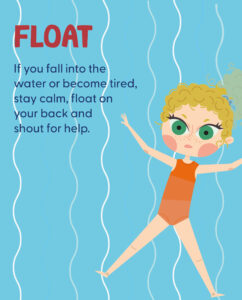
They should know to try and keep calm, stay still and float on their back whilst calling for help.
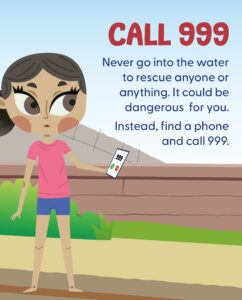
Your instinct might be to jump into the water to help. But if you see someone else struggling in the water you should shout for help, call 999 and ask for the coastguard. Never get in the water to help them.