

Water safety
Water is very powerful and can be really dangerous – even if you’re an amazing swimmer.
Think about these water safety tips if you go near or in water when playing with your friends.
How do I know if water is safe?
If you go to your local leisure centre or swimming pool there will be lifeguards (the people with whistles sat on big chairs). Lifeguards are specially trained to keep you safe in and around the water. But lifeguards can’t be everywhere at once.
A good rule to follow is ‘if there aren’t lifeguards, don’t go swimming’. Plenty of beaches will have lifeguards, but you should also follow the advice on their signs. They might even put up flags to tell you which parts of the water are safe to swim in.
This is because outdoor water like the sea can be really powerful, even if the water isn’t deep.
Never swim in lakes, quarries or rivers. You should also stay off ice and frozen water at all times – you can read more about ice and water safety in the winter by clicking here.
Cold water
Water is colder than you think and could make you so cold that its dangerous.
If you feel cold, or your body starts to shake, get out of the water straight away and warm up with dry clothes and move around. Star-jumps or running around can help you warm up quickly.
Speak to a trusted grownup or lifeguard if you can’t warm up.
Slipping on rocks
If you are outside, wet rocks can make you slip and maybe hit your head. Always be careful and don’t run around near water, even at the swimming pool.
Jumping and diving
Only jump into water when a lifeguard has said it is safe to do so.
Before you jump or dive, always check how deep the water is and lookout for rocks, branches, or rubbish that might be in the water.
If there are any “No Diving” or “No Swimming” signs, keep out of the water.
Fast flowing Water
Moving water or under water currents can be strong even if they don’t look it and may carry you away from safety.
What if I get into trouble in the water?
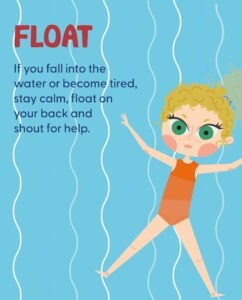
Try to keep calm, stay still and float on your back whilst calling for help.
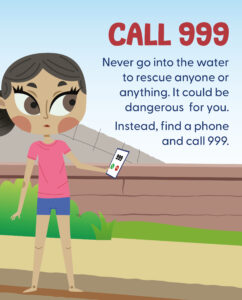
If you see someone else struggling in the water you should shout for help, call 999 and ask for the coastguard. Never get in the water to help them.
Riddle me this!
 Oh yeahhh..you got it right!

 Oh noooo..you got it wrong!